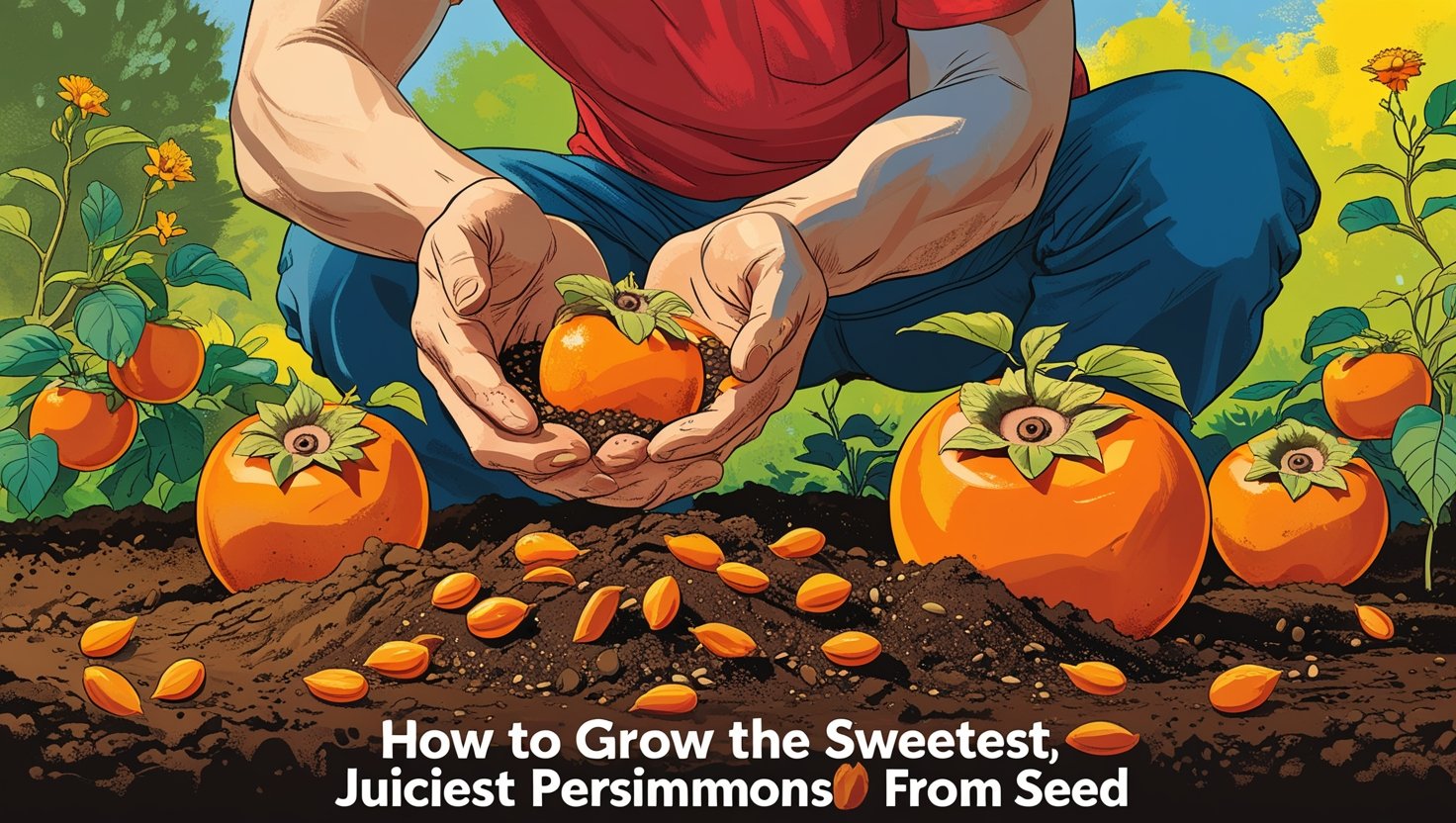
Imagine plucking sun-warmed, honey-sweet fruit from a tree you nurtured from a single seed. Growing persimmons from seed isn’t just economical, it’s deeply rewarding. With the right know-how, you’ll coax tiny kernels into vigorous saplings that yield the juiciest persimmons in your backyard.
From Fruit Pod to Future Tree:
Choosing premium seeds is your first step toward the sweetest persimmons.
- Select fully ripe, unblemished persimmon fruits, look for deep orange skin and a plump feel.
- Scoop seeds, rinse gently under running water, and remove any clinging pulp.
- Spread seeds on a paper towel and let them air-dry for 24 hours.
Drying prevents fungal rot during storage or stratification. Only use seeds that feel firm and intact, shriveled or cracked ones won’t germinate reliably.
Mastering Cold Stratification:
Persimmon seeds require a cold dormancy period to break open their tough outer coat.
- Place dried seeds in a sealable plastic bag with a handful of moist peat moss or sand.
- Label the bag with the date, then tuck it into your refrigerator’s crisper for 8–12 weeks.
- Check monthly to ensure the medium stays damp but not soggy.
This simulated winter is crucial: without stratification, seeds can lie dormant indefinitely and fail to sprout come spring.
Crafting the Perfect Persimmon Potting Mix:
A balanced soil mix lays the foundation for healthy, vigorous seedlings.
• 40% high-quality potting soil • 30% coarse sand or perlite for drainage • 20% aged compost for nutrients • 10% coconut coir or peat moss to retain moisture
Mix ingredients thoroughly. The goal is a light, friable medium that drains excess water while holding enough moisture for tender roots.
Planting Depths and Spatial Wisdom:
Proper planting depth and spacing encourage robust root systems.
- Fill 4-inch pots with your prepped mix.
- Press each seed about 1 inch below the surface, pointed end down.
- Space seeds at least 2 inches apart to avoid entanglement.
Water gently to settle the soil without washing seeds deeper. Label each pot with the planting date and variety (if known) to track germination progress.
Optimal Germination Environment:
Seeds need a warm, bright spot for consistent sprouting.
Place pots in an area that receives indirect morning sun, and around 65–75°F is ideal. Avoid direct afternoon sun that can overheat the soil and scorch emerging seedlings.
Keep the soil lightly moist:
- Mist daily if the top inch of soil dries out.
- Use a humidity dome or clear plastic cover to trap moisture, but vent daily to prevent mold.
Under these conditions, first shoots typically break ground in 6–10 weeks.
Budding to Branching:
Once cotyledons (first leaves) appear, step up care to foster strong growth.
- Move seedlings to a spot with 6–8 hours of direct morning sun.
- Water deeply once or twice a week, allow topsoil to dry between waterings.
- Begin feeding after true leaves form: use a balanced, water-soluble fertilizer at half strength every 2–3 weeks.
Monitor seedlings for leggy growth. If stems stretch toward the light, rotate pots weekly to promote straight, sturdy shoots.
Hardening Off and Transplant Timing:
Before planting outdoors, saplings must acclimate to harsher conditions.
- Start hardening off two weeks before your area’s last frost date.
- Day 1–3: Set seedlings outdoors in sheltered shade for 1–2 hours.
- Gradually increase sun exposure and time outside, aiming for full sun by day 10.
- Reduce watering slightly to toughen root systems against drought stress.
Transplant when seedlings have 4–6 true leaves and stand at least 6 inches tall. Choose a cloudy day or late afternoon to minimize transplant shock.
Watering Wisdom and Feeding Formula for Young Trees:
Young persimmon trees thrive on a steady regimen of water and nutrition.
Watering Tips:
- Deep soak once every 7–10 days during dry spells.
- Use drip irrigation or soaker hoses to encourage deep rooting.
- Mulch with organic straw or wood chips to retain moisture and regulate soil temperature.
Fertilizing Strategy:
- Year 1: Hold off fertilizing at transplant time; focus on root establishment.
- Year 2: Apply a granular 10-10-10 NPK fertilizer, use 1 cup per tree, divided in early spring and mid-summer.
- Years 3+: Increase total annual fertilizer by 1 cup for each additional year of the tree’s age, always split between spring and early summer applications.
Consistent feeding ensures vigorous canopy growth and future fruit production.
Protecting Saplings and Managing Pests:
Young trees are vulnerable to critters and disease.
Protective Measures:
- Install a tree guard or mesh cage to deter deer and rabbits.
- Keep grass and weeds away from the trunk’s base to prevent rodent damage.
Pest and Disease Watch:
- Inspect leaves monthly for aphids, scale, or spider mites—treat infestations early with insecticidal soap.
- Ensure good air circulation to reduce fungal risks like leaf spot or root rot; prune crowded branches in winter.
- Avoid overhead watering to minimize leaf moisture and disease pressure.
Proactive monitoring reduces losses and keeps trees healthy through early growth stages.
Pruning for Fruitful Structure:
Well-timed pruning builds a strong framework for heavy fruit loads.
- Year 1: After planting, pinch the leader tip when the tree reaches 36 inches tall to encourage branching.
- Years 2–3: Select 3–5 evenly spaced scaffold limbs; remove competing shoots.
- Annual Maintenance: In late winter, trim away dead or crossing branches and thin excessive new growth to let light into the canopy.
Proper pruning not only fosters robust structure but also channels the tree’s energy into producing the juiciest persimmons.
Harvesting Your First Homegrown Persimmons:
Most seed-grown persimmon trees start fruiting in 5–7 years, but the wait is worth every bite.
- Harvest non-astringent varieties (e.g., Fuyu) when the skin turns bright orange and fruits feel firm.
- Astringent types (e.g., Hachiya) should be allowed to soften fully on the tree or after picking.
- Use pruning shears to snip fruit with a short stem to avoid bruising.
Store ripe persimmons at room temperature or in the refrigerator to extend shelf life up to two weeks. Enjoy their sweet, honeyed flesh in fresh salads, smoothies, or simply on their own.
Conclusion:
Growing the sweetest, juiciest persimmons from seed demands patience, precision, and a touch of devotion. By selecting quality seeds, mastering cold stratification, crafting optimal soil, and maintaining diligent care, from watering and feeding to pruning and protection, you’ll transform tiny kernels into fruit-laden trees. In time, the fruits of your labor will reward you with homegrown persimmons that burst with sun-flavored sweetness.
FAQs:
1. How long do persimmon seeds take to germinate?
Typically 6–10 weeks under ideal warmth and moisture.
2. Can I grow any persimmon variety from seed?
Yes, though seed-grown trees may differ from the parent fruit.
3. Do I need to graft for sweeter persimmons?
No, but grafting ensures cultivar consistency and faster fruiting.
4. What soil pH do persimmons prefer?
Slightly acidic to neutral, around pH 6.0–7.0.
5. How often should young persimmon trees be watered?
Deeply once a week, adjusting for rainfall and soil type.
6. When can I expect my first homegrown persimmons?
Usually 5–7 years after planting from seed.